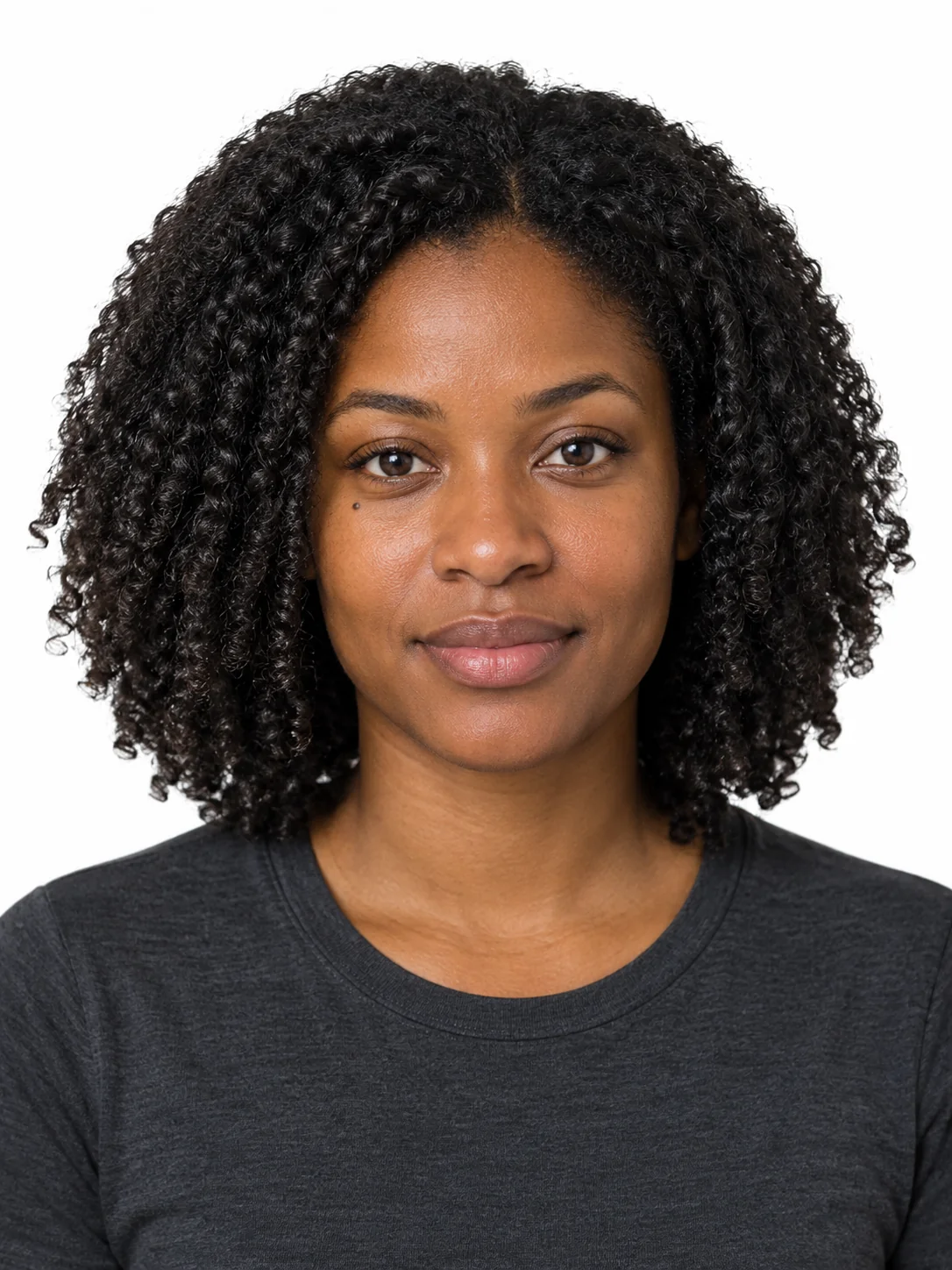
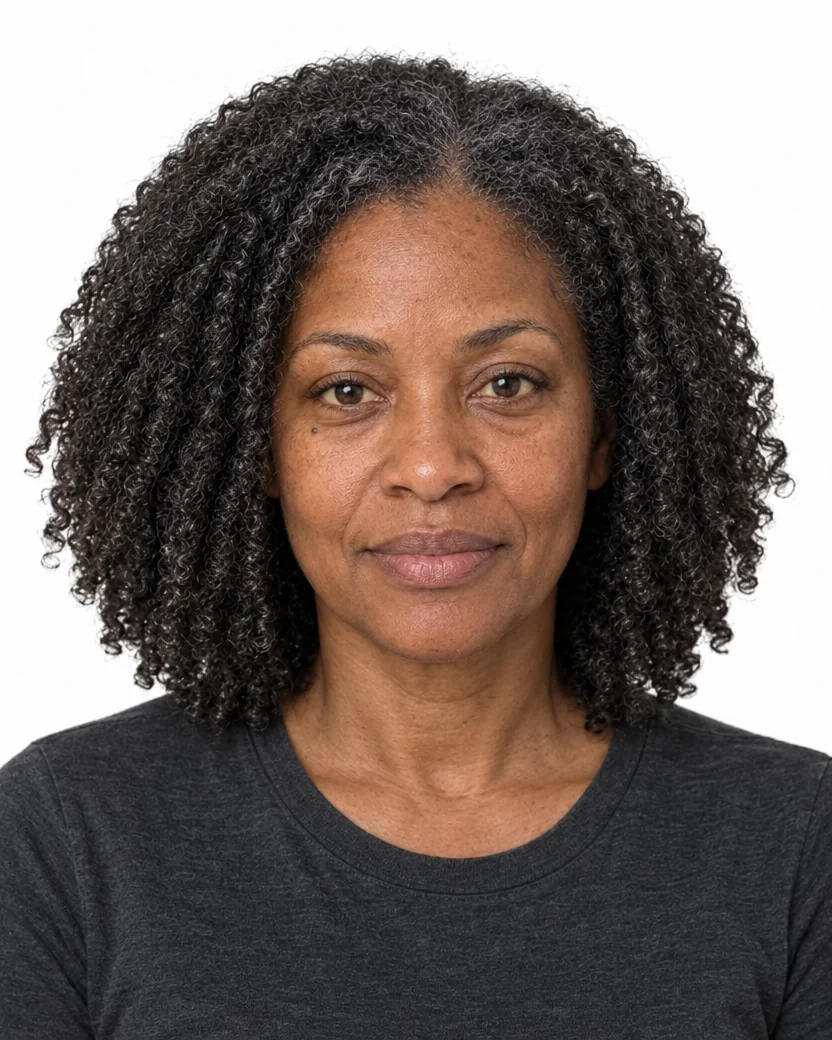
Each set is a complete prompt. Copy it, or open it in the studio with the model, aspect ratio and resolution it was written for.
Same Person At Forty Five
The lightest setting: the smallest change and the closest match to the original person.
Nano Banana 2image → image3:4 · 2K
Reference photos: One frontal portrait with even light and nothing covering the face. The clothing and the background of the reference are carried over and only mild aging is applied.
Age the person in the reference image forward to about forty-five years old while keeping the same identity, same eye shape, same nose length, same ear size and the same light direction as the reference photo. Keep the framing, pose and clothing style of the reference; only the fabric reads slightly softer with wear and the posture a little more settled. Age markers: fine lines at the outer eye corners, shallow nasolabial folds, a slightly softer jawline, mild skin laxity at the neck, two or three small pigment spots on the cheek, hair with a few grey strands at the temples and slightly less density at the part. Do not change the bone structure: the brow ridge, chin and cheekbones stay the same. Skin keeps natural warmth and texture with visible pores, no smoothing. Lighting stays as in the reference photo with one gentle fill added, no hard shadows. Photographic realism, natural colour, no beauty retouching, no HDR, no text.
Negative prompt
changed identity, cartoon aging, grey plastic skin, heavy wrinkles, different lighting, different clothing, retouched smooth skin, HDR
Reference only — the image models available here do not take a separate negative prompt, so this list is guidance for editing the prompt above.
Why this works: The lightest setting and the closest match to the original person. If the result looks too old, delete the two phrases about pigment spots and skin laxity.
Same Person At Sixty
The contrast is clear and the facial structure starts to change.
GPT Image 2.5 Flareimage → image4:5 · 2K
Reference photos: One frontal portrait. The sixty-year setting is the balance point where the change is visible but the person is still recognisable.
Show the person in the reference image at about sixty years old, same identity, same eye shape, same ear size, same nose proportions and the same light direction as the reference photo. Keep the framing and pose; the posture settles slightly, shoulders a little forward, and the clothing style matches the reference but with softer, worn fabric. Age markers: jawline softening with faint jowls, volume loss under the eyes, deeper nasolabial folds, a slight droop of the upper eyelids, thinner lips with fine vertical lines, visible tendons and two soft creases on the neck, more grey through the hair with a receding hairline, slightly less full eyebrows. Skin: thinner with faint veins at the temples, uneven pigmentation on the forehead, fine cross-hatching around the mouth, natural warmth retained, no smoothing. Eyes: slightly yellowed whites, a little less moist, still alert. Expression: calm and direct, faint half-smile as in the reference. Photographic realism with natural texture and available light, no HDR, no text.
Negative prompt
changed identity, exaggerated wrinkles, cartoon old face, grey plastic skin, harsh studio light, different clothing, HDR, watermark
Reference only — the image models available here do not take a separate negative prompt, so this list is guidance for editing the prompt above.
Why this works: Between fifty and sixty-five, piled-up wrinkles are the most common failure; always place the soft-tissue changes before the wrinkles in the prompt.
Same Person At Eighty Five
The most emotional setting; grey hair, hands and posture all have to be described.
GPT Image 2.5 Flareimage → image1:1 · 2K
Reference photos: One portrait. For the oldest setting, add a description of the hands: at eighty-five the hands are the most easily overlooked detail and the one that breaks the illusion fastest.
Age the person in the reference image to about eighty-five years old, preserving the same identity: same eye shape and spacing, same ear size, same nose length, same brow ridge. Keep the light direction of the reference photo and a quiet indoor setting with soft window light; the posture is seated, shoulders rounded, hands resting in the lap. Age markers: deep orbital volume loss with sunken eyes, pronounced jowls and a softened jawline, thin translucent skin with visible veins on the temples and the backs of the hands, prominent knuckles, age spots across the forehead and cheekbones, thin lips with vertical lines, a deeply lined neck, sparse white hair combed back, heavy eyelids with a slight droop, a few sparse white eyebrow hairs. Eyes: pale and slightly dry but calm and warm. Hands: the main subject of the lower frame, veins and tendons visible, a plain thin wedding band worn smooth. Skin keeps natural warmth; no smoothing and no plastic sheen. Photographic realism, natural diffused light, fine texture detail, no HDR, no text.
Negative prompt
changed identity, cartoon elderly face, plastic skin, over-sharpened pores, harsh flash, glowing white hair, HDR, watermark
Reference only — the image models available here do not take a separate negative prompt, so this list is guidance for editing the prompt above.
Why this works: The most emotional setting. The detail in the hands decides how real the image feels; if the hands fall apart, move them to rest on a blanket to reduce the structural complexity.
Text-Only Aging Sample
Page samples and low-cost load testing.
Nano Banana 2 Litetext → image3:4 · 1K
A realistic portrait of a generic adult at about seventy years old, seated near a window in soft daylight. Age markers: softened jawline with faint jowls, orbital volume loss, deeper nasolabial folds, thinner lips with fine vertical lines, sparse grey hair combed back, thin eyebrows, age spots on the temples and cheekbones, thin skin with visible veins on the back of one hand. Posture: seated slightly forward, shoulders rounded, hands folded in the lap, calm direct gaze with a faint half-smile. Clothing: a soft worn knit cardigan over a plain shirt, muted colours. Setting: a quiet room with a plain wall, a wooden chair and a windowsill with one small plant, background softly out of focus. Lighting: soft window light from the left with a gentle fill, natural shadows, warm neutral white balance, no hard highlights. Photographic realism with natural skin texture, no retouching, no HDR, no text or logos.
Why this works: The text-only sample setting and the cheapest one. It carries no identity and exists only as a fallback for the page; real users should use one of the first three settings.