Each set is a complete prompt. Copy it, or open it in the studio with the model, aspect ratio and resolution it was written for.
Clay Pet Figurine
The standard approach: a hand-sculpted clay texture on a wooden base.
Nano Banana 2image → image1:1 · 2K
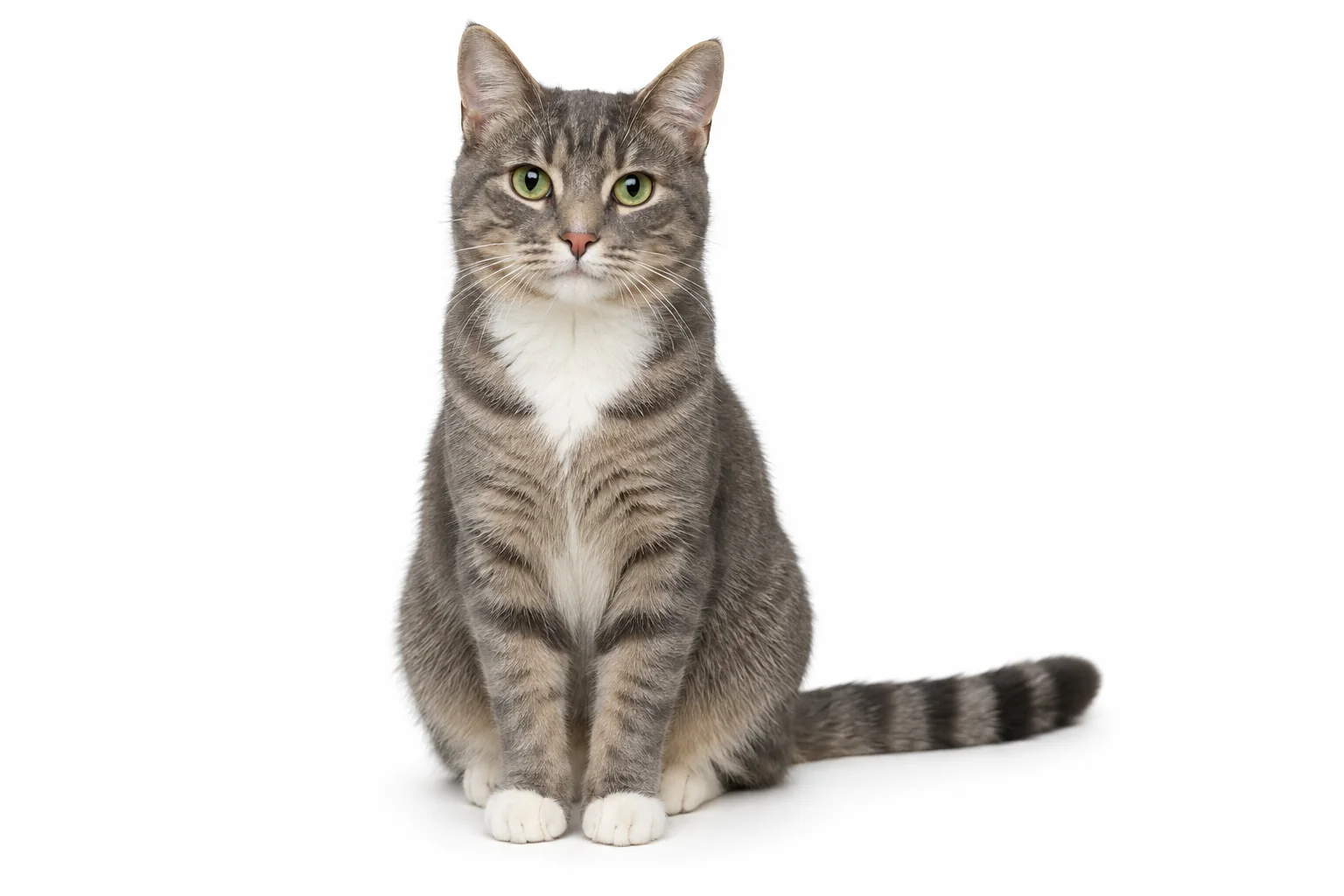
Reference photos: One front-facing photo of the pet. The point of this entry is how well the markings and the face match, so do not use a blurry or profile photo.
Turn the pet in the reference image into a hand-sculpted clay figurine on a small stone base, photographed as a collectible product shot. Identity comes first: reproduce the animal's markings exactly as in the reference, including the shape and position of the stripes or patches on the head, the colour and extent of the chest and paw markings, and the pattern on the tail; keep the eye colour, eye shape, ear shape and muzzle proportions of the reference. The figurine is a sculpted object, not a living animal: a smoothed matte clay surface with faint tool marks and one fingerprint-like dent, fur suggested as five or six solid sculpted masses with three groove lines rather than individual hairs, a thin support rod visible under the belly where needed, the head slightly oversized in the collectible style. Eyes painted on with a dark iris ring, a glass-bead highlight and a thin gloss coat over the eye only. Pose: sitting upright with the tail curled around the right haunch, one ear angled back a few degrees. Base: a matte grey stone base no wider than one and a half times the figurine's footprint, with a faint chamfered edge. Scene: a light grey seamless studio sweep, one small wooden block out of focus behind, soft contact shadow under the base. Light: two soft boxes with a gentle top key, even exposure, one smooth reflection on the glossed eyes. Square framing, product photography, no text, no logos, no watermark.
Negative prompt
realistic fur rendering, living animal, plastic shiny surface, wrong markings, missing patches, oversized base, cluttered background, watermark
Reference only — the image models available here do not take a separate negative prompt, so this list is guidance for editing the prompt above.
Why this works: The standard entry. If the markings do not match, turn the markings sentence into an item-by-item list and move it to the front, and push every style word to the end.
Resin Gloss Collectible
You want the more collectible look of a polished resin finish.
Nano Banana Proimage → image4:5 · 2K
Reference photos: One photo of the pet. The gloss resin entry strengthens highlights, so it suits a finished shot for a display shelf.
Create a polished resin collectible of the pet in the reference image, photographed like a high-end statue. Keep the markings faithful: the position and shape of every patch and stripe on the head, chest, paws and tail, the eye colour and eye shape, the ear shape and muzzle length. Material: poured resin with a high gloss finish, a subtle depth in the translucent layers, one long smooth specular sweep running along the shoulder and back, small bubbles visible near the base edge, a faint mould line. Sculpt: clean rounded volumes with soft transitions, fur suggested as broad planes with two or three carved grooves, whiskers as two thin rigid rods, eyes as polished dark cabochons with a sharp highlight, nose and paw pads in a slightly softer matte finish. Pose: standing with the head turned about thirty degrees toward the camera and the tail raised. Base: a dark acrylic plinth with a bevel, no wider than one and a half times the figurine's footprint, its top surface reflecting the paws. Scene: a black velvet surface, a soft gradient background from charcoal to deep grey, one rim light along the resin edge. Light: a large soft box from the upper left plus one narrow strip light from the rear right to carve the silhouette, controlled reflections, no blown highlights. Vertical 4:5 framing, product photography, no text, no logos, no watermark.
Negative prompt
matte clay look, wrong markings, flat lighting, blown highlights, real animal, clutter, watermark
Reference only — the image models available here do not take a separate negative prompt, so this list is guidance for editing the prompt above.
Why this works: The resin entry. The shape of the highlight decides whether it reads as resin or as plastic: one long soft highlight band is far more convincing than a cluster of small bright spots.
Shelf Collection Row
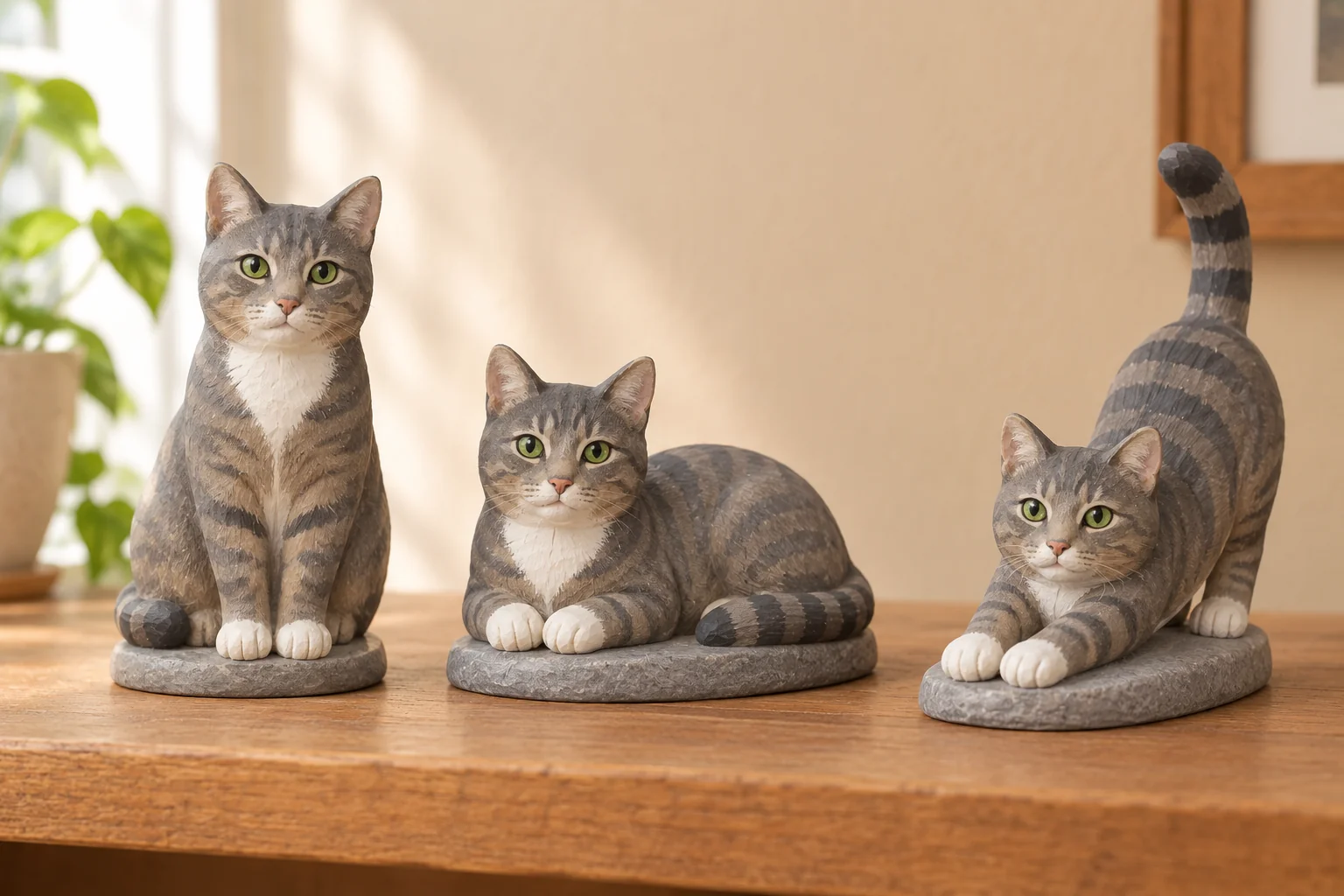
The same pet in several poses, arranged like a collection shelf.
GPT Image 2.5 Flareimage → image3:2 · 2K
Reference photos: One photo of the pet. This entry produces three poses of the same pet for the collection-shelf effect.
Photograph a small collection of three figurines of the same pet from the reference image, arranged in a row on a wooden shelf. All three share exactly the same material, scale, base and markings, which is what makes them a set: matte hand-sculpted clay with faint tool marks, a matte grey stone base no wider than one and a half times each figurine's footprint, and identical markings — same patch on the chest, same striped pattern and tail rings, same white paws, same eye colour. Only the pose changes, left to right: sitting upright with the tail curled, lying down with the head resting on the front paws, and stretching forward with the tail up. Keep the muzzle proportions, ear shape and head size of the reference consistent across all three. Scene: a light wooden shelf with visible grain, a plain warm wall behind, one small ceramic dish out of focus at the right end of the shelf. Light: soft window light from the left with a gentle fill, even exposure across all three figures, one soft shadow falling to the right, no colour cast. Camera: 50mm at shelf height, wide 3:2 framing with the three figures evenly spaced and equal in the frame, shallow depth of field. Product photography, no text, no logos, no watermark.
Negative prompt
different markings between figures, mismatched scale, different material, clustered layout, clutter on the shelf, watermark
Reference only — the image models available here do not take a separate negative prompt, so this list is guidance for editing the prompt above.
Why this works: The collection-shelf entry. The material, the base and the markings must be word-for-word identical across all three and only the pose changes; once the material description is altered, they stop reading as a set.
Text-Only Pet Figurine Sample
Page samples and low-cost load testing.
Nano Banana 2 Litetext → image1:1 · 1K
A collectible hand-sculpted clay figurine of a generic ginger tabby cat sitting upright on a small matte grey stone base, photographed as a product shot on a light grey seamless sweep. Sculpt: smoothed matte clay with faint tool marks, fur as five or six solid masses with three groove lines, a head slightly oversized in the collectible style, whiskers as two thin rigid rods, ears with a lighter inner surface, tail curled around the right haunch. Markings: an M-shaped tabby pattern on the forehead, three darker rings on the tail, white paws, a white chin patch, amber eyes painted with a dark iris ring, a glass-bead highlight and a thin gloss coat over the eyes only. Base: chamfered stone base no wider than one and a half times the figurine's footprint with a soft contact shadow beneath. Light: two soft boxes with a gentle top key, even exposure, one small reflection on the glossed eyes, no hard highlights. Square framing, shallow depth of field, product photography, no text, no logos, no watermark.
Why this works: The text-only sample entry, the cheapest one. It covers pages that do not have pet material yet.