Each set is a complete prompt. Copy it, or open it in the studio with the model, aspect ratio and resolution it was written for.
Portrait Plush On Desk
The standard setup: one plush sitting on a desk.
Nano Banana 2image → image1:1 · 2K
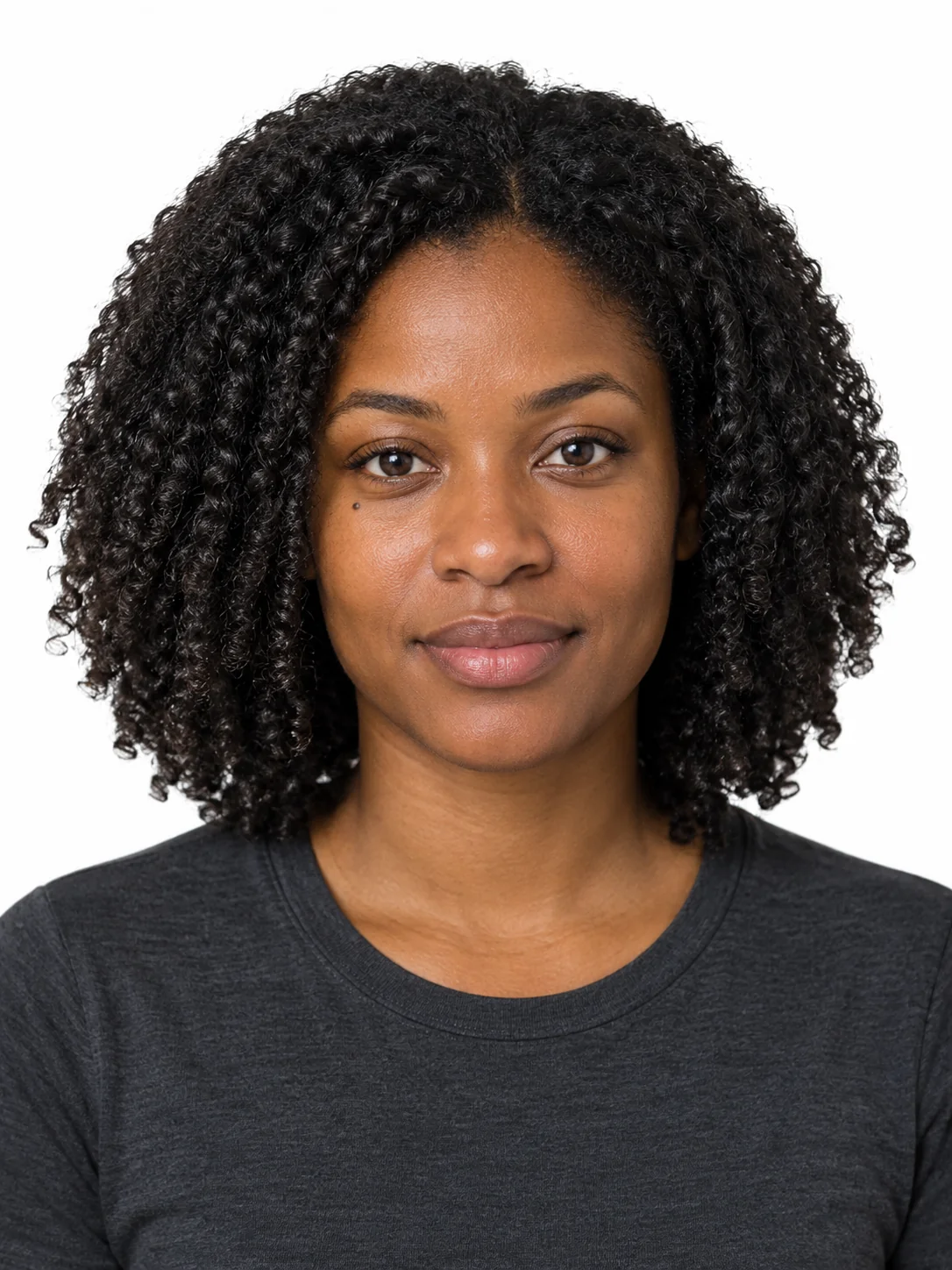
Reference photos: One front-facing portrait, half-body. The plush keeps the hairstyle silhouette and the main clothing color, and the face is expressed with embroidery thread only.
Turn the person in the reference image into a handmade plush toy sitting on a desk, keeping the hairstyle silhouette, hair colour and the main colour of their clothing recognisable as soft fabric shapes. Toy construction: short-pile fleece with a visible weave, a seam running along each side of the head and down the back, one loose thread on the shoulder, stuffing that leaves the shape slightly lumpy, a worn patch where the fabric is a little fluffy. Face: no skin, no teeth, no individual hair strands; two embroidered eyes made of four short straight stitches each, a small embroidered smile curve, two round felt cheeks stitched on, and one small stitched-on fabric nose. Body: rounded head and a squat body, stubby arms and legs, felt shoes sewn to the feet, fabric clothing with visible hem stitching and a small button. Hair: several flat fabric panels in the person's hair colour stitched over the head with a visible centre seam. Size cue: about the height of a coffee cup on the desk. Scene: a wooden desk with a closed notebook and a pencil, softly out of focus behind. Lighting: soft window light from the left, gentle shadow under the plush, no harsh specular highlights. Photographic macro shot, shallow depth of field, handmade craft feel, no illustration style.
Negative prompt
realistic skin, teeth, individual hair strands, glossy plastic, 3D render look, uncanny face, cluttered background, text, watermarks
Reference only — the image models available here do not take a separate negative prompt, so this list is guidance for editing the prompt above.
Why this works: Standard variant. If it turns into a cartoon 3D render, add the three sentences covering fabric, seams and stuffing first, and leave the facial features alone.
Pet Plush From Photo
A cat or a dog made into a plush, with the fur color and markings kept.
Seedream 5 Liteimage → image3:4 · 2K
Seedream 5 Lite does not offer 4:5 1K — this runs at 3:4 2K.
Reference photos: One front-facing photo of the pet; the fur colors and markings are written as patchwork color blocks, and keeping those markings is what this variant depends on.
Turn the pet in the reference image into a hand-sewn plush toy photographed on a windowsill. Keep the fur colours and the markings recognisable by translating them into stitched fabric panels: the base colour as short-pile fleece, the markings as separate patches sewn on with visible blanket stitching, and any white areas as a lighter cotton weave. Toy construction: a seam running down the centre of the belly, one ear stitched slightly crooked, a loose thread at the tail, stuffing that makes the body a little lumpy, a worn patch on one paw. Face: no realistic fur, no teeth; two embroidered eyes of four short straight stitches each, an embroidered triangular nose in a slightly darker thread, four stitched whiskers on each side, a felt tongue stitched under the mouth. Limbs: four stubby fabric legs with felt pads on the underside, a short stitched tail standing up. Size cue: about the length of a tablet. Scene: a windowsill with a plant pot out of focus behind, soft daylight from the left, warm and gentle. Photographic macro shot, shallow depth of field, handmade craft feel, no illustration style, no text.
Negative prompt
realistic fur, animal teeth, glossy eyes, 3D render, uncanny animal face, messy background, extra legs, text, watermarks
Reference only — the image models available here do not take a separate negative prompt, so this list is guidance for editing the prompt above.
Why this works: Pet variant. The markings have to be written as stitched-on patchwork panels, which is what makes it read as a plush rather than as an animal.
Held Plush Portrait
For a photo with emotional weight, in which two hands hold the plush.
GPT Image 2.5 Flareimage → image3:4 · 2K
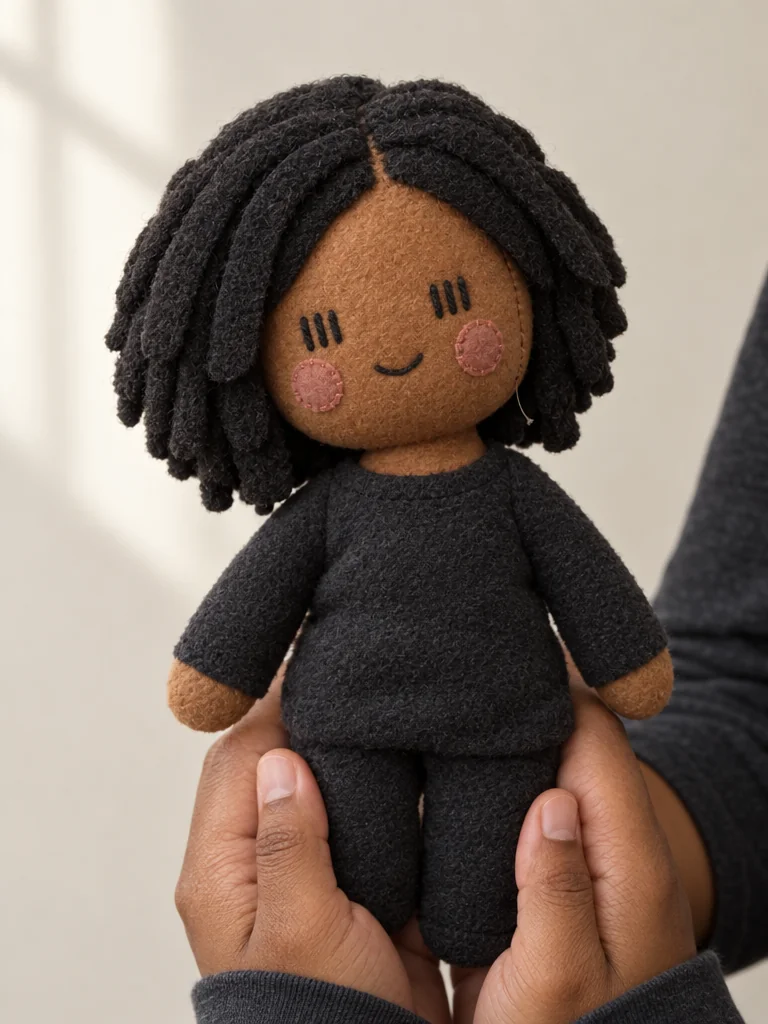
Reference photos: One half-body portrait; the plush is sewn to match this person, and the person in the photo appears only as hands and part of the torso.
Photograph a handmade plush toy held in two hands, with the person in the reference image acting as the hands and the torso only: no face in the frame, just the forearms, a sleeve cuff and a sliver of shirt. Keep the person's sleeve colour and skin tone natural, and only fingertips and thumbs are visible at the lower edge, curled gently around the plush. The plush is sewn after the same person: short-pile fleece in their main clothing colour, several flat fabric hair panels stitched over the head, an embroidered face with eyes of four short straight stitches each and a small smile, felt cheeks stitched on, a visible seam along the side of the head, one loose thread and a slightly lumpy stuffing shape. Pose: the plush is held up at chest height, slightly tilted, its arms hanging. Light: soft window light from the upper left, warm skin, a gentle shadow of the plush falling across the forearm, cream wall behind out of focus. Vertical 3:4 framing, tight crop on the plush and hands. Photographic realism, handmade craft feel, no illustration style, no text.
Negative prompt
visible face in frame, distorted fingers, extra fingers, realistic skin on the toy, glossy plastic, cluttered background, text, watermarks
Reference only — the image models available here do not take a separate negative prompt, so this list is guidance for editing the prompt above.
Why this works: Emotional variant. Hands break down most easily, so this one deliberately shows only the fingertips and thumbs; if the hands still break down, place the plush on the forearm instead.
Text-Only Plush Sample
For page samples and low-cost stress testing.
Nano Banana 2 Litetext → image1:1 · 1K
A macro photograph of a handmade plush toy sitting on a wooden desk. Construction: short-pile fleece with a visible weave, seams along the sides of the head and down the back, one loose thread on the shoulder, stuffing that leaves the shape slightly lumpy, a worn patch on one leg. Face: no skin and no teeth, two embroidered eyes made of four short straight stitches each, a small embroidered smile curve, two round felt cheeks stitched on, a small fabric nose. Body: a rounded head and squat body, stubby fabric arms and legs, felt shoes sewn to the feet, fabric clothing in dusty sage with visible hem stitching and one small button. Hair: flat fabric panels stitched over the head with a visible centre seam. Size cue: about the height of a coffee cup. Scene: a wooden desk with a closed notebook and a pencil out of focus behind. Lighting: soft window light from the left, a gentle shadow under the plush, no harsh highlights. Shallow depth of field, handmade craft feel, photographic realism, no illustration style, no text.
Why this works: Text-only sample variant, the cheapest option. It is a fallback for pages that have no source material, and its four construction sentences for stitching, seams, embroidery thread and stuffing match the main variant.