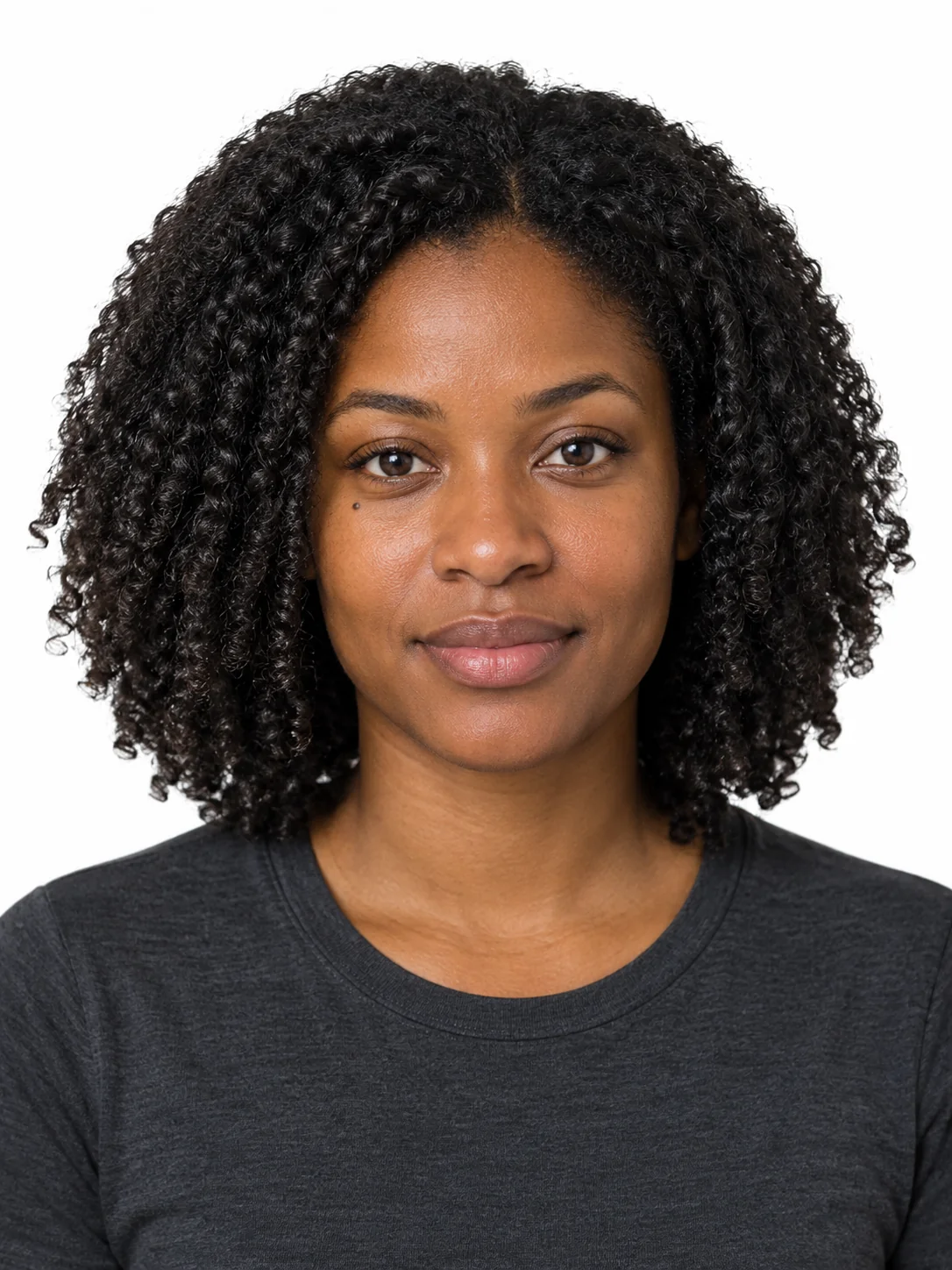
Each set is a complete prompt. Copy it, or open it in the studio with the model, aspect ratio and resolution it was written for.
1924 Tycoon Portrait
Suits, overcoats and vintage cars, in black and white or early two-color dye transfer.
Nano Banana 2image → image3:4 · 2K
Reference photos: One front-facing portrait. If the source photo has a beard or a distinctive hairstyle, make sure the styling description in the prompt does not conflict with it.
Move the person in the reference image into the year 1924 as a wealthy industrialist photographed by a professional studio. Keep their exact facial identity, face shape, nose and eye spacing; only wardrobe, lighting and film stock change. Wardrobe: three-piece charcoal wool suit with a stiff collar, silk tie held by a slim gold pin, a heavy camel overcoat over the shoulders, fedora tilted slightly back, one cigarette holder between the fingers. Lighting: a single hard key from a Fresnel lamp at upper left, deep falloff into the background, no fill, crisp shadow of the hat brim across the forehead. Set: a panelled study with a rotary telephone and a folded newspaper on a side table, worn wood and a little dust visible. Film: orthochromatic black and white, full tonal range with clean highlights and deep blacks, red lips rendered darker than they look, fine grain, slight soft focus at the edges of the frame, one hair-thin scratch across the upper corner. Vertical 3:4 framing, three-quarter length. Not a modern photograph, no digital clarity.
Negative prompt
modern clothing, colour, digital sharpness, HDR, plastic skin, changed facial identity, text, watermark
Reference only — the image models available here do not take a separate negative prompt, so this list is guidance for editing the prompt above.
Why this works: Suits from the 1970s and 1980s are close to 1924 and are easily changed by mistake; describe the three-piece suit before the accessories and do not reverse that order.
1954 Hollywood Promo
Studio lighting and trench coats, in black and white or early color, with the strongest star quality.
Nano Banana Proimage → image2:3 · 2K
Reference photos: One half-body portrait; a more relaxed expression in the source works better for a star publicity photo.
Recreate the person in the reference image as a 1954 Hollywood studio publicity portrait. Preserve their exact facial identity and expression style; styling, lighting and film stock are from the mid-1950s. Look: glossy waved shoulder-length hair with a deep side part, sharp winged eyeliner, matte red lipstick, one strand of pearls and a satin wrap dress with a full collar. Lighting: classic three-point studio setup with a hard key from the upper right, a subtle fill from a white card, and a back light that separates the satin shoulder from the background; visible catchlights shaped like the rectangular soft boxes. Set: a painted canvas backdrop with a soft grey-to-cream gradient, one floor lamp out of focus at the left edge. Film: mid-1950s colour negative with slightly muted teal shadows, warm creamy skin, gentle grain, soft halation around the pearl highlights, a hint of registration wobble at the frame edge. Vertical 2:3 framing, head and torso, chin slightly lifted. Photographic, not an illustration, no modern retouching.
Negative prompt
modern makeup, matte flat lighting, digital sharpness, HDR, plastic skin, changed facial identity, text, logos
Reference only — the image models available here do not take a separate negative prompt, so this list is guidance for editing the prompt above.
Why this works: Pearls and satin carry the highlights in this tier; include them and the soft glossy 1950s texture comes through.
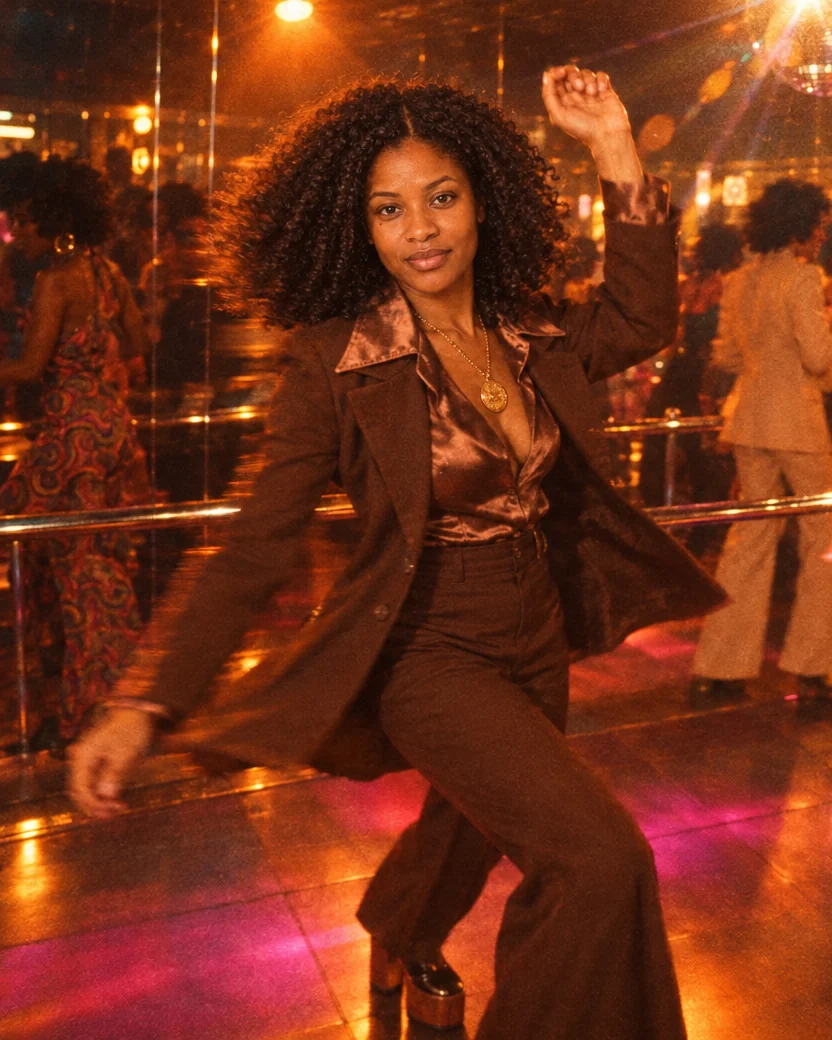
1978 Disco Floor
Warm amber light, wide-angle distortion and saturated orange and brown.
GPT Image 2.5 Flareimage → image4:5 · 2K
Reference photos: One full-body or half-body photo; a source with a dynamic pose works best, dancing, turning or mid-sentence.
Place the person in the reference image on a 1978 disco dance floor, photographed mid-movement. Keep their exact facial identity and features; the era supplies wardrobe, colour and light. Wardrobe: wide-lapel brown suit with a satin shirt, gold medallion, platform shoes, hair with volume and a centre part. Action: caught in the middle of a turn, weight on one foot, one arm raised, fabric swinging. Lighting: warm tungsten practicals plus one bounced amber spot from the ceiling, coloured gel pool of magenta on the floor, visible lens flare from a mirror ball that is out of frame, motion blur of about one eighth of a second behind the shoulders. Look: 1978 colour film pushed one stop, saturated orange and brown palette, cyan shadows, heavy grain, slight wide-angle distortion as if shot at 28mm from close range, warm highlight bloom. Set: a mirrored wall, a chrome rail, several blurred dancers in the background. Vertical 4:5 framing, subject slightly below centre. Not a modern club photo, no LED lighting, no clean digital sharpness.
Negative prompt
modern club lighting, LED colour, clean digital look, frozen action, HDR, plastic skin, extra limbs, text, watermarks
Reference only — the image models available here do not take a separate negative prompt, so this list is guidance for editing the prompt above.
Why this works: Motion blur and a mirrored wall are the identifiers of disco. If the person gets stretched out of shape, change 28mm to 35mm and keep the warm color and the mirror ball.
1983 Aerobics Studio
Bright workout wear and high-key studio light, the most photogenic and the most fun.
Nano Banana 2image → image3:4 · 2K
Reference photos: One full-body photo; a source with a large range of motion lets you keep the pose as it is and reduces the chance of broken hands and feet.
Turn the person in the reference image into a 1983 aerobics studio photograph. Preserve their exact facial identity; the styling and the era do the rest. Look: high-cut leotard in hot pink over shiny lycra leggings, terry-cloth headband and wristbands, white leg warmers, hair in a side ponytail with a scrunchie, bright coral lipstick. Pose: mid-step with the knee lifted and both hands on the hips, a slightly forward lean as in an instructional photo. Lighting: bright even high-key studio light from two soft boxes, small hard shadow under the feet, glossy skin sheen, background of a mirrored wall and a pastel linoleum floor with painted guide lines. Camera: 35mm with a slight rim of barrel distortion, flash mixed with continuous light, warm white balance, saturated magenta and teal accents. Film look: 1983 colour negative, visible grain in the mirror reflection, mild halation around the white leg warmers, no digital crispness. Vertical 3:4 framing, full body with a little headroom. Not a modern gym photo, no LED panels, no HDR.
Negative prompt
modern sportswear, modern gym, LED lighting, crisp digital edges, HDR, distorted limbs, extra fingers, text, watermark
Reference only — the image models available here do not take a separate negative prompt, so this list is guidance for editing the prompt above.
Why this works: The most crowd-pleasing tier because of the high-key look and the bright colors. Hands and feet break most often, so lock the pose description first and adjust the clothing colors after.
Text-Only Time Travel Sample
The text-only sample tier and the cheapest one, used as a fallback for pages where no photo has been uploaded yet.
Seedream 5 Litetext → image3:4 · 2K
Seedream 5 Lite does not offer 3:4 1K — this runs at 3:4 2K.
A studio portrait of a generic adult staged in the year 1954 as a mid-century Hollywood publicity shot: glossy waved shoulder-length hair with a deep side part, winged eyeliner, matte red lipstick, a strand of pearls and a satin wrap dress with a full collar. Pose: three-quarter length, chin slightly lifted, calm confident half-smile directed at the lens. Set: a painted canvas backdrop with a soft grey-to-cream gradient and one floor lamp out of focus at the left edge. Light: a classic three-point studio setup with a hard key from the upper right, a subtle white card fill and a back light separating the satin shoulder from the backdrop; visible rectangular softbox catchlights. Film: mid-1950s colour negative with slightly muted teal shadows, warm creamy skin, gentle grain and a soft halation around the pearl highlights. Vertical 3:4 framing, photographic realism, no illustration style, no text and no logos.
Why this works: To change the era, replace the styling and lighting sentences: for 1924 use a hard Fresnel lamp with black-and-white orthochromatic response, and for 1978 use warm tungsten light with motion blur.